When Features Are Easier to Copy, What Makes Your Business Hard to Replace?
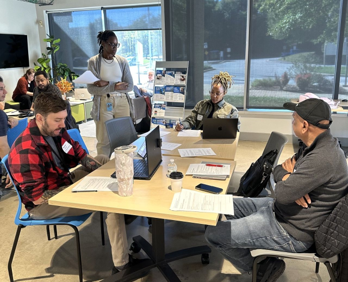
Conversations and collaboration help entrepreneurs understand challenges, exchange ideas, and build lasting relationships.
A competitor used to need a team of engineers, months of development, and a deep understanding of a product to build something comparable. Increasingly, AI is compressing that process into something much cheaper and faster.
In October, a free, open-source tool called REA (Reverse Engineer Anything) surged past 300,000 GitHub stars. The tool allows AI coding agents to inspect how apps, games, and websites behave without access to their source code, returning explanations and supporting evidence that developers can use to build similar functionality. Its documentation emphasizes lawful research, interoperability, and analysis of software users own or are authorized to examine.

Open-source development is changing how quickly businesses can build and reproduce software features.
REA isn’t the first tool to make established software easier to reproduce, and it won’t be the last. The broader shift is what matters: understanding how a competing product works, then building something comparable, is becoming less expensive and time-consuming.
The same month, a developer name Brandon Thomas released ArtCraft, a collection of seven free, open-source applications built with Rust and Anthropic’s Claude to recreate core Adobe Creative Cloud tools, including Photoshop, Illustrator, and Premiere. The project includes real Photoshop file support, though the applications remain early alpha and the developer’s ambition to achieve full feature parity is still a goal, not an established result.
Recreating an interface isn’t the same as replacing a product. ArtCraft doesn’t need to match every Adobe feature to make its existence significant. It demonstrates how AI-assisted development is lowering the barrier to competing with established software companies.
For founders, that changes the question. If a competitor can reproduce what your product does, what gives customers a reason to stay with you?
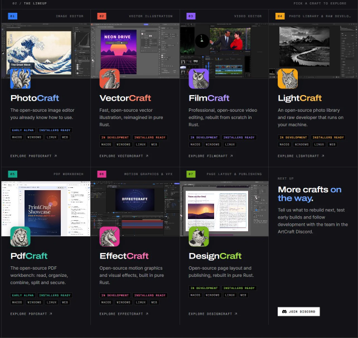
ArtCraft brings together seven open-source creative applications, illustrating the changing landscape of software competition.
AI Is redefining competitive advantage
Enterprise technology companies are already wrestling with this question. We see this month that as AI makes software easier to replicate, competitive advantage increasingly shifts toward what surrounds the code: proprietary data, regulatory positioning, network effects, trusted brands, and distribution.
None of those advantages is automatic. Data is only valuable when it is relevant, reliable, and lawfully usable. A brand matters when customers trust it. A network effect exists when a product becomes more useful as more people use it. Distribution matters when a company can consistently reach the customers it needs.
The point isn’t that software no longer matters. A weak product still loses, and a technically superior product can still win. But features alone may provide a shorter-lived advantage than founders have traditionally assumed.
Consider what happens when two products offer roughly the same functionality. One requires customers to migrate their data, retrain employees, rebuild workflows, and trust an unfamiliar provider. The other already fits into their daily operations, has a reliable support team, and understands their needs. Even if the newcomer offers comparable features at a lower price, switching may not be worth the disruption. The incumbent’s advantage isn’t necessarily better code. It’s everything the customer would have to give up to leave. That’s the distinction founders need to understand: being difficult to build is not the same as being difficult to replace.
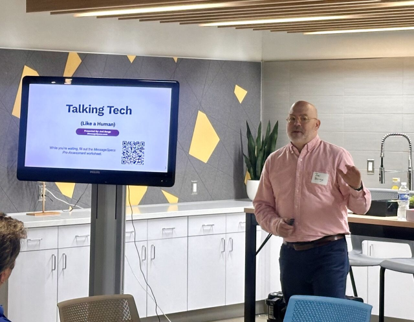
Sharing expertise helps founders turn emerging technology into practical business decisions.
What founders can build
If AI makes individual features easier to reproduce, we need to think beyond what their product does and consider why customers choose it, continue using it, and recommend it to others.
Three areas deserve particular attention.
- Know the problem better than the copycat.
Reproducing a feature is relatively straightforward when the feature is visible. Understanding why customers need it, what frustrates them about existing solutions, and how it fits into their daily lives is harder.
That knowledge comes from conversations, observation, and repeated engagement with customers. It helps founders prioritize the improvements that actually matter instead of racing competitors to release another feature. - Build into the customer’s workflow.
A product becomes more valuable when it fits naturally into how a customer operates. Integrations, accumulated context, reliable service, and established processes can make switching costly even when alternative products offer similar functionality.
The goal isn’t to trap customers. It’s to become useful enough that replacing you creates more work than value. - Create advantages that compound.
Customer relationships, trusted distribution channels, exclusive partnerships, and permissioned data can become more valuable over time. Each customer interaction can reveal something that improves the product. Each successful partnership can open access to new markets. Each improvement can strengthen the reason customers stay.
Founders should ask themselves a simple question: What becomes more valuable about our business after another year of serving customers? If the answer is only that the product has more features, the advantage may be easier to copy than they think.
Just as important is the pace of learning. When a competitor can close a feature gap quickly, staying ahead becomes less about a single launch and more about a repeatable cycle of listening, learning, building, and improving. Companies that develop that habit can keep moving as the market changes. Companies that depend on one breakthrough risk discovering how quickly a lead can disappear.
Conversations and collaboration help entrepreneurs understand challenges, exchange ideas, and build lasting relationships.
Why the MIC ecosystem matters more than ever
Building a defensible business is not just a technical challenge. Founders also need access to customers, capital, experienced operators, strategic partners, and talent. Those resources can be difficult to assemble alone, particularly for early-stage companies competing against established players. That’s where an innovation ecosystem can make a difference.
At the Maryland Innovation Center, the work extends beyond helping founders develop products. Programs like the Cyber Howard Accelerator give entrepreneurs a place to build, learn, and connect with others working through similar challenges. Events like our Investor Summit bring founders and investors into the same room. The broader network creates opportunities to develop relationships and access resources that a codebase cannot provide on its own.
None of this makes a company automatically defensible. Access to an accelerator or an investor event is not a substitute for customer demand, and a strong network cannot rescue a product that doesn’t solve a real problem. But the right environment can help founders build the relationships, capabilities, and commercial traction that make a business more resilient.
That kind of ecosystem is easier to appreciate when you see it over time. HCEDA’s newly released FY26 Stakeholder Annual Report captures what that looked like this year: new companies choosing Howard County, local businesses receiving support, and the Maryland Innovation Center community continuing to grow. It’s a reminder that building a resilient business isn’t just about shipping software. It’s also about building in a place that’s continuously investing in founders.

As AI lowers the cost of building software, the question for founders isn’t simply how quickly they can ship the next feature. It’s what they’re building around that feature, and whether those advantages will grow stronger over time.