HCEDA’s 2027–2029 Strategic Plan: 8 Strategies Shaping Howard County’s Next Three Years

HCEDA’s 2027–2029 Strategic Plan outlines eight strategies for Howard County’s economic future.
Howard County has demonstrated resilience and continued economic strength despite challenges in recent years. HCEDA’s 2027–2029 Strategic Plan builds on that foundation by supporting existing businesses, preparing the workforce for emerging opportunities, and strengthening the county’s long-term competitiveness.
That is the backdrop for the updated Strategic Plan, prepared by Sage Policy Group. The plan builds on HCEDA’s previous framework while responding to three forces reshaping the economic landscape: resurgent inflation, significant shifts in federal policy, and the accelerating adoption of artificial intelligence.
The result is an updated roadmap built around eight strategies. Some continue work already underway; others respond to emerging challenges and opportunities.
Where Howard County stands

Howard County’s AAA bond ratings reflect a foundation of financial strength.
The numbers tell a story of relative strength, but not one without pressure. Maryland has lost approximately 29,700 federal jobs since October 2024. Statewide establishment employment declined by 0.4% in 2025. Howard County fared better, with establishment employment falling just 0.1%. The county’s labor force also grew modestly over the past two years, while Maryland’s declined by more than 29,000 people.
Still, resilience does not mean immunity. Howard County’s unemployment rate climbed from a historic low of 1.3% in April 2023 to 3.9% in April 2026. Population growth has remained below 0.8% annually for five consecutive years. And the median home sale price reached nearly $620,000 in 2025, a 48% increase since 2019.
These trends point to a challenge that runs throughout the plan: Howard County needs to remain attractive to businesses while ensuring workers can afford to live here and participate in the local economy.
Residents continue to value what the county offers. Nearly 90% of survey respondents rated its quality of life a 7 or higher out of 10. Preserving that strength while addressing the pressures behind it is a central part of the work ahead.
The eight strategies
1. Prioritize business retention, expansion, and strategic sector growth

Networking and strategic connections support business retention and expansion.
Supporting businesses already operating in Howard County remains HCEDA’s primary business development focus. That means continuing the services local businesses and entrepreneurs value, including networking, strategic connections, entrepreneurial advising, and business assistance.
The plan also calls for a more selective, evidence-based approach to attracting new businesses, alongside targeted international business development. The goal is not simply to bring in more companies, but to pursue opportunities that align with the county’s existing strengths and regional advantages.
That includes supporting sectors where Howard County already has a business base or meaningful room to grow, such as cybersecurity/IT, health technology, defense, and advanced manufacturing.
2. Influence and support key County initiatives
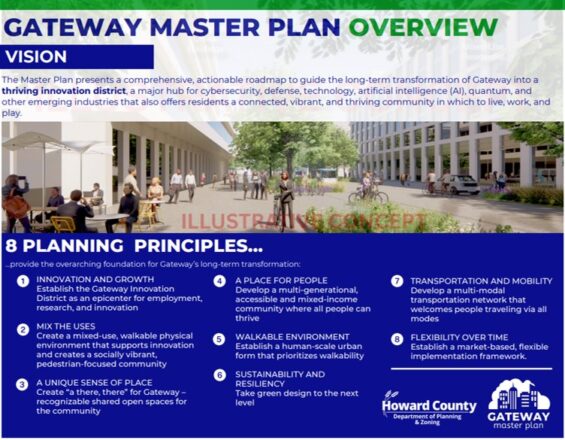
The Gateway Master Plan connects innovation, redevelopment, transportation, and quality of place.
Where people live, how they move, and how communities grow and evolve influence a region’s ability to attract talent, businesses, and investment. HCEDA will continue to serve as a policy partner on key issues, including placemaking, redevelopment, and housing affordability, that support long-term economic growth. These are areas where the County’s General Plan, HoCo By Design, identifies HCEDA as a lead or supporting agency.
The county’s involvement in the adoption of the Gateway Master Plan in 2025 offers an example of this role. By contributing to broader initiatives, HCEDA can help advance the conditions that support business growth beyond its direct programs and services.
3. Build on Howard County’s innovation ecosystem

The Maryland Innovation Center connects entrepreneurs with resources, programming, and opportunities to grow.
Howard County’s innovation ecosystem is one of its economic assets, and the Maryland Innovation Center (MIC) remains a central part of it. MIC membership grew by 45%, reflecting its role as a hub for entrepreneurs, small businesses, mentorship, training, and connections.
The plan calls for building on that momentum by sustaining and expanding MIC programming, deepening initiatives such as the Cyber Howard Accelerator, and continuing BRITE programming. It also emphasizes support for the Columbia Gateway Innovation District as a place-based expression of the county’s innovation strategy.
The broader goal is to strengthen the connections between businesses, entrepreneurs, resources, and opportunities that help companies grow.
4. Advance AI readiness and workforce adaptation
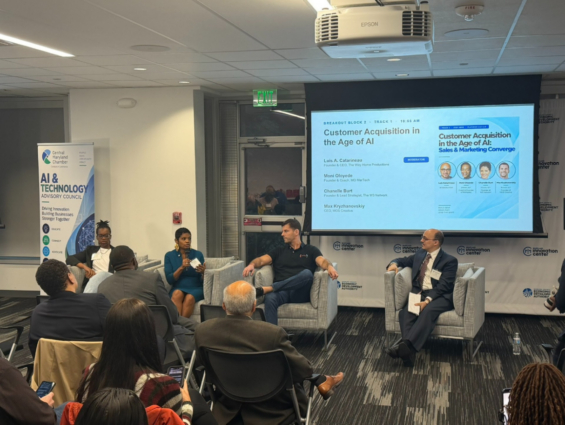
Practical AI education helps businesses and workers prepare for changing tools and skill requirements.
Artificial intelligence is no longer a distant possibility for businesses and workers. It is already changing how work gets done, creating opportunities while raising questions about skills, productivity, and the future of certain occupations.
Rather than trying to predict exactly how AI will affect every industry, HCEDA plans to take a practical, partnership-based approach. The first step is accessible foundational AI training for entrepreneurs, small business owners, and workers.
From there, HCEDA and its partners can assess demand and consider one or two sector- or career-specific pilots. The focus will be on helping people use emerging tools responsibly, adapt to changing skill requirements, and maintain pathways to economic opportunity.
5. Strengthen research, messaging, and economic intelligence

HCEDA’s weekly Data Dives translate economic research into accessible information about Howard County.
Having a strong economy is one thing. Making sure businesses, investors, and prospective workers understand what a county has to offer is another.
HCEDA has expanded its research and communications work through weekly Data Dives, video storytelling, additional research capacity, and new HCEDA and MIC digital platforms. The plan calls for building on those efforts to communicate a clearer value proposition for Howard County and strengthen its position within the broader Baltimore-Washington region.
This work supports more than awareness. Better economic intelligence can help HCEDA understand business needs, identify opportunities, support existing companies, and make a stronger case for attracting new investment.
6. Pursue regional cooperation and coalitions
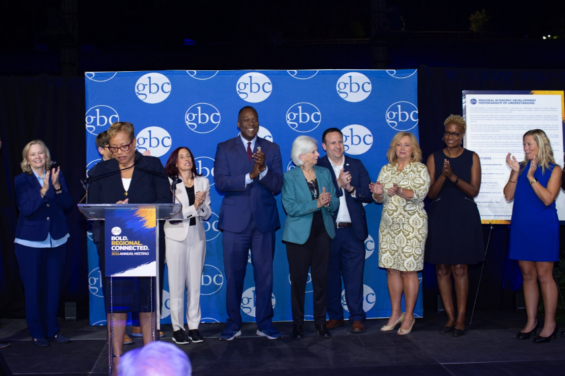
Regional partnerships help address shared economic priorities across jurisdictional boundaries.
Howard County’s economy does not stop at its borders. Three in four jobs located in the county are held by people who live elsewhere, illustrating just how connected its workforce is to the surrounding region.
The same is true of challenges involving transportation, infrastructure, business attraction, and economic resilience. No single county or organization can address all of them alone.
HCEDA plans to deepen its participation in existing regional partnerships and selectively help bring organizations together around shared priorities. The emphasis is on collaboration where Howard County has a meaningful stake and where coordinated action can make a difference.
7. Prioritize high-impact special projects
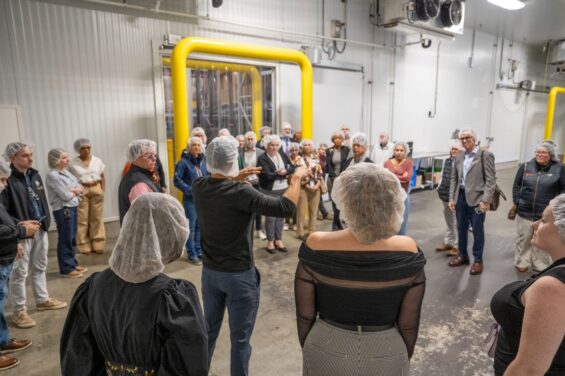
Business engagement helps identify opportunities and inform high-impact special projects.
Economic conditions can change quickly. New challenges emerge, unexpected opportunities appear, and some issues require attention before they become larger problems.
HCEDA will preserve the flexibility to respond to those situations, while being more deliberate about which special projects it takes on. The plan emphasizes prioritizing efforts that advance its strategic goals, support County priorities, complement the work of other organizations, or address urgent economic risks.
Just as important, these projects should not pull resources away from HCEDA’s core responsibilities, particularly business retention and expansion and small business support.
8. Monitor economic disruptions and bolster resilience
Support for affected federal workers illustrates HCEDA’s role in responding to economic disruption.
Monitoring economic disruption is not enough. The plan calls for HCEDA to take a more active role in helping Howard County prepare for and respond to it.
That includes maintaining an early-warning function to track developments such as emerging technologies, policy changes, labor market shifts, industry vulnerabilities, and business closures. It also means strengthening longer-term resilience through industry diversification, workforce adaptability, and business continuity awareness.
When disruptions do occur, HCEDA aims to have coordination networks in place that connect businesses, County agencies, workforce partners, educational institutions, regional organizations, and state and federal officials.
HCEDA’s support for federal workers affected by job losses, including career fairs and BRITE programming, offers an example of how that responsive role can work in practice.
What it means for Howard County
Taken together, the strategies point to three broader priorities. Small businesses remain central to the county’s economic future. More than 90% of Howard County establishments have fewer than 50 employees. Supporting these businesses is not a side initiative; it is a core part of maintaining a diverse and resilient local economy. Access to advice, connections, financing resources, and growth opportunities can make a meaningful difference in whether companies stay and expand.
Affordability is an economic competitiveness issue. Rising housing costs affect more than household budgets. When workers cannot afford to live near their jobs, employers face a smaller accessible talent pool, longer commutes, and greater difficulty filling essential positions. Housing, transportation, and workforce access are therefore connected to the county’s ability to attract and retain businesses.
Regional leadership is becoming more important. Federal policy changes and funding uncertainty are placing greater responsibility on state, county, and regional organizations. Many of the issues facing Howard County, from workforce mobility to business attraction, cross jurisdictional lines. Stronger partnerships will be necessary to address them.
How progress will be measured
The plan identifies a range of indicators HCEDA can use to track economic development activity and progress through 2029.
These include new business formation, employment in key industries, business assistance cases, employer engagements, capital investment associated with HCEDA-assisted projects, and the share of businesses founded or owned by minorities. Other measures include MIC membership, Cyber Howard Accelerator graduates, website traffic and social media engagement, commercial vacancy in key locations, and the share of households considered cost-burdened by housing expenses.
The plan also recognizes that not every outcome can be captured in a metric. Stronger regional partnerships, expanded workforce programming, and HCEDA’s influence on county policy and redevelopment efforts will also help determine whether the strategies are making a difference.
Looking ahead
Howard County enters the 2027-2029 period with meaningful advantages: a strong quality of life, an established business community, and an innovation ecosystem with room to grow. But those strengths cannot be taken for granted.
The next chapter will depend on how effectively the county supports the businesses already here, prepares workers and employers for economic change, addresses barriers to growth, and works with its regional partners.
HCEDA’s strategic plan lays out how the organization intends to contribute to that work over the next three years.
Read the full plan: The complete HCEDA 2027-2029 Strategic Plan includes the economic data, stakeholder findings, and detailed actions behind each strategy.